
Sex Offender Checks in Cochran County
The Texas Public Sex Offender Registry search is the official public starting point for Cochran County. Texas Department of Public Safety builds the site from registration data sent by local law-enforcement authorities under Code of Criminal Procedure Chapter 62. It can return Cochran County records by county, name, or place. It is not a list of every person accused or convicted of a sexual offense. An absent result does not clear a person of all criminal history, and a listed result does not predict future conduct.
Before searching, gather a full name, spelling variants, an approximate age, and a place tied to the person or area of concern. Search more than one way. County filtering can find locations coded to Cochran County, while an address-radius search may cross county lines. Compare the full profile instead of relying on a similar name. For a broader look at criminal cases beyond registration duties, see Cochran County criminal court case records.
Cochran County Registry Search Views
Name, county, and map searches answer different questions. A name search works best when the person is known, but spelling and aliases matter. A Cochran County filter is useful for a broad county scan. City, ZIP, address, and radius controls focus on a smaller place, though the map point is not a property survey and may reflect a residence, transient-location description, or another address type allowed by the program.
The DPS registration-program overview explains the state's system and provides context for the public interface.
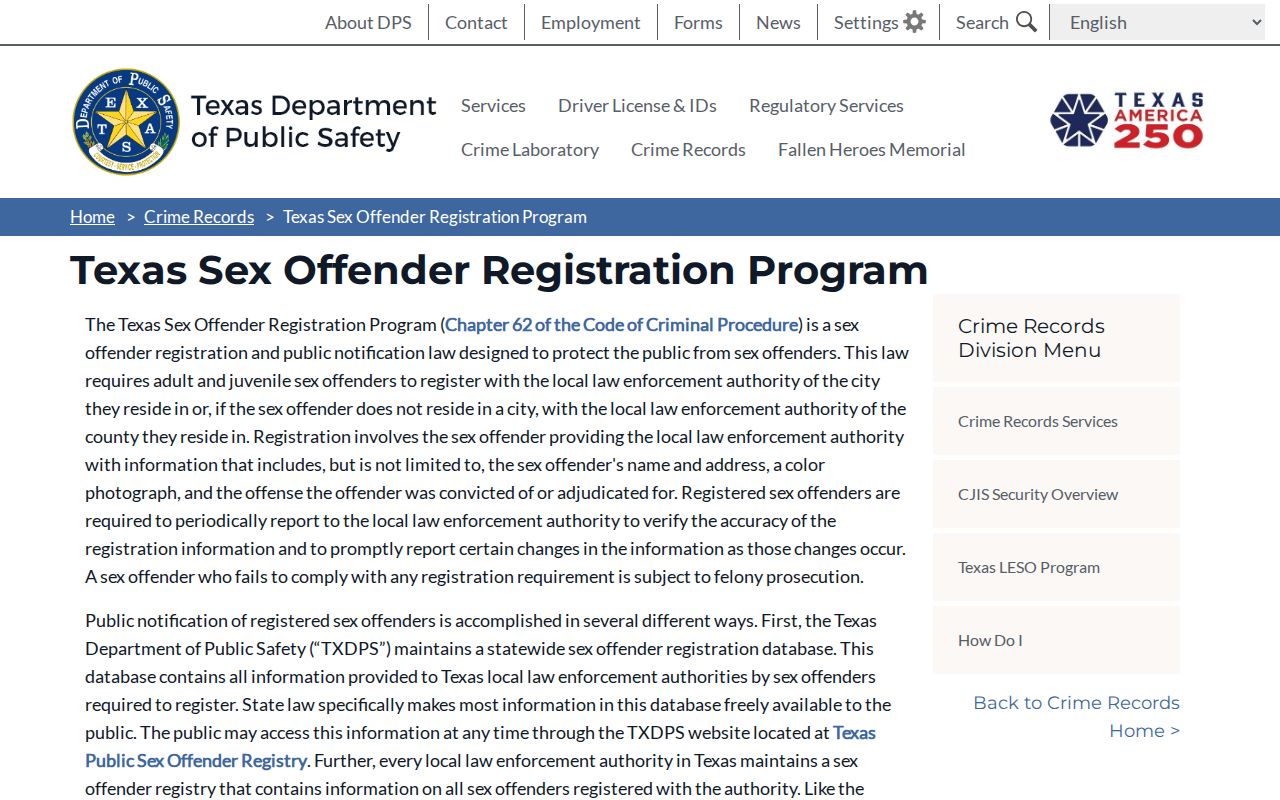
This official program view helps separate public search tools from the local duty to register and verify information.
How to Search the Texas Public Sex Offender Registry
Use the live DPS interface because fields and controls can change during maintenance or a site refresh. The current public design supports both name and geographic routes. A sound Cochran County sex offender search records the criteria and date used, checks likely profiles against several identifiers, and treats each result as a record that may need confirmation.
- Open the Texas DPS registry and choose either the name route or a geographic search.
- Enter the best known fields. For a local scan, choose Cochran County, Morton, Whiteface, a ZIP code, or an address and radius.
- Review possible matches by photograph, aliases, age, physical traits, and location rather than by name alone.
- Open the full profile and read the offense, registration authority, status, verification details, and update information before drawing a conclusion.
| Field or control | Type | Route | Use |
|---|---|---|---|
| Last Name | Text | Name | Surname spelling controls the match |
| First and Middle Name | Text | Name | Narrows common surnames |
| Address | Text | Location | Sets a geographic center |
| City or County | Text or dropdown | Location | Use Morton, Whiteface, or Cochran |
| ZIP Code | Text | Location | Uses a five-digit area |
| Radius | Dropdown | Location | Check the live screen for current distance options |
| Search or Clear | Button | Both | Runs or resets the query |
The Texas DPS public registry source image shows the official search surface used for this process.
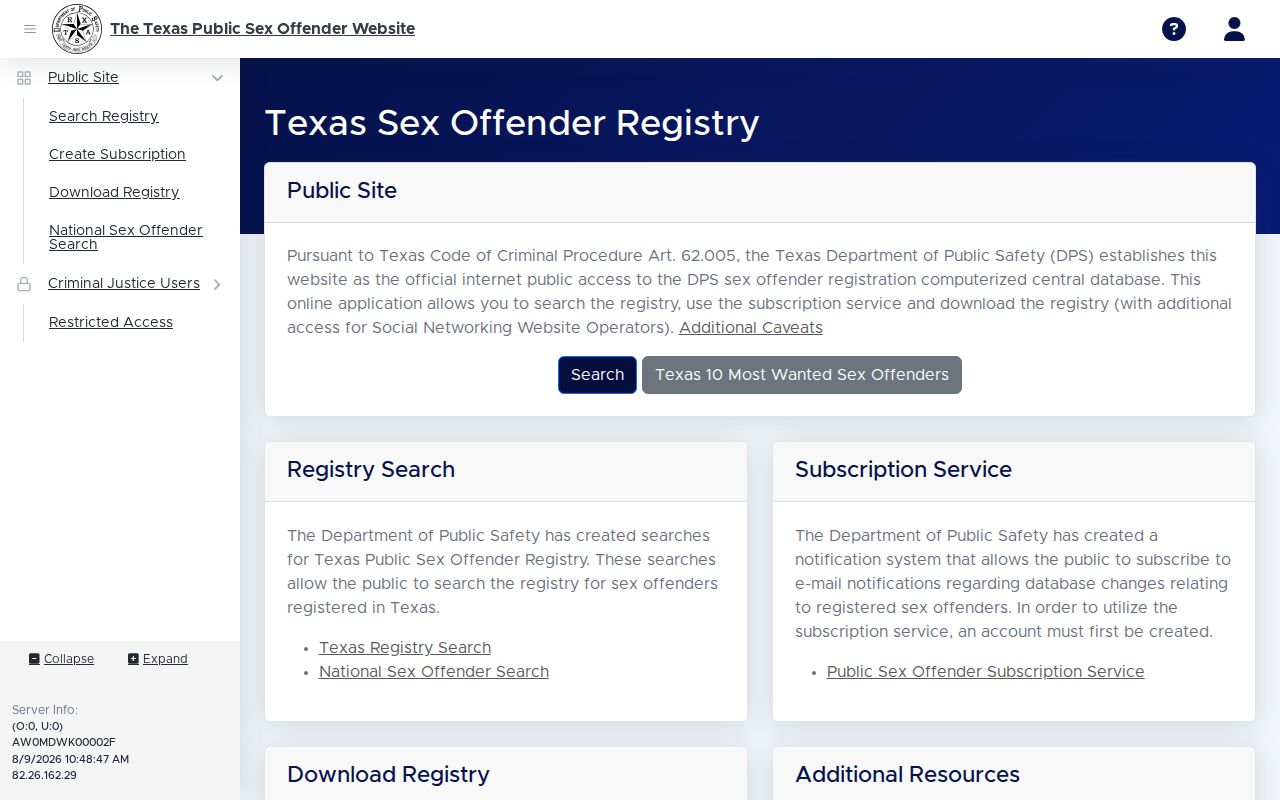
The screen is a starting point; profile details and local confirmation give a match its proper context.
Cochran County Sheriff's Registry Role
Texas ordinarily assigns local registration to the sheriff for a person living outside a municipality and to the police chief for a person living within one, unless DPS designates a central authority. The verified Cochran County contact is the Cochran County Sheriff, Room B-7, 100 North Main Street, Morton, Texas 79346. The office phone is 806-266-5211.
No separate sex-offender desk hours or appointment rules appear on the county page. Call before a registration visit or before bringing information about a suspected failure to comply. The sheriff can receive a local concern, while DPS maintains the statewide public record. If the concern relates to an address inside a municipality, the appropriate police authority may also have the registration role. An immediate threat belongs with 911, not a registry search or private contact.
Note: The county publishes no separate registry map, local offender list, alert app, or verification calendar in the official sources reviewed.
Inside a Registry Profile
A Texas public profile gathers enough detail to distinguish people and explain the legal basis for registration. Field presence depends on what the local authority reports and what Chapter 62 permits DPS to release. Do not expect every row on every profile. Compare identity, image, age, physical traits, status, and address together.
| Identity | Legal name, aliases, date of birth or age, sex, race, and status |
|---|---|
| Image and traits | Registration photograph, height, weight, hair and eye color, scars, marks, and tattoos when supplied |
| Location | Registered address or location description, city, county, ZIP, and map placement where supported |
| Offense | Reportable offense, statutory citation, conviction or adjudication date, jurisdiction, and related disposition data |
| Registration | Registration authority, verification or reporting status, status dates, and any public risk designation |
| Other fields | Reported school, work, institution, vehicle, plate, and registry identifier information when public |
A registry profile is not the whole law-enforcement file. It is also not the same as an arrest report, local court file, or statewide conviction search.
Cochran County Registry Profile Privacy
Article 62.005 makes most registration information public but draws firm lines around sensitive data. A public Cochran County profile does not expose a Social Security number, driver's-license number, telephone number, victim-identifying details, or online identifiers. Victim age and sex categories may appear when lawful, but the victim's identity does not. This split lets the registry serve notice without publishing the complete file.
The DPS criminal history and registry FAQ adds official context about access, registration, and the limits of public records.
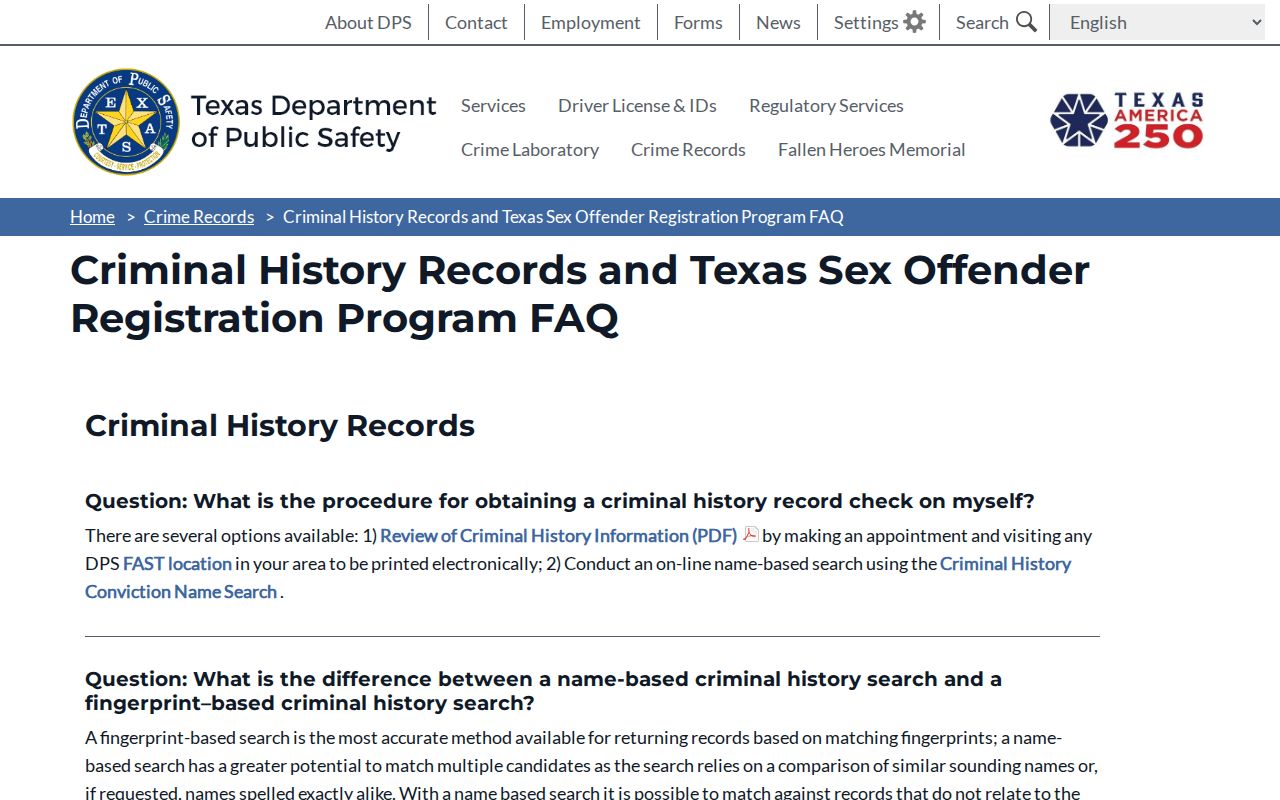
The FAQ is useful when a field is unclear, but a correction to a Texas entry should still go through DPS and the local registration authority.
Texas Registration Levels and Requirements
Texas duration rules are offense-based. They should not be recast as the federal Tier I, Tier II, and Tier III system. Article 62.101 sets the main lifetime and ten-year periods, while Article 62.058 controls verification timing. Some profiles show a risk assessment, but that label does not replace the offense and statutory rule.
| Texas category | Duration | Verification baseline | Visibility |
|---|---|---|---|
| Enumerated adult offenses under Article 62.101(a) | Life | Usually annual | Public, subject to statutory exclusions or a court restriction |
| Qualifying repeat sexually violent offenses | Life | At least once every 90 days | Public, subject to statutory exclusions |
| Other covered adult conviction or deferred adjudication | Ten years after the latest statutory release or discharge event | Usually annual around the birthday anniversary | Generally public while the duty remains |
| Juvenile adjudication | Ten years after disposition or its completion, whichever is later | As Chapter 62 and the local authority direct | A court may exempt or restrict juvenile information |
Changes in address and other required facts are event-driven duties. They do not wait for the next annual check-in. Chapter 62 also contains exemption, juvenile, and possible early-termination procedures that a public portal cannot decide.
Cochran County Registry Searches Across States
A Texas search can miss a relevant registration held by another jurisdiction. The National Sex Offender Public Website from the U.S. Department of Justice searches participating jurisdictions and is the right second layer when a person may have moved across state lines. It does not replace DPS for explaining or correcting a Texas record.
The official NSOPW source shows the national search entry point used after the Cochran County registry check.
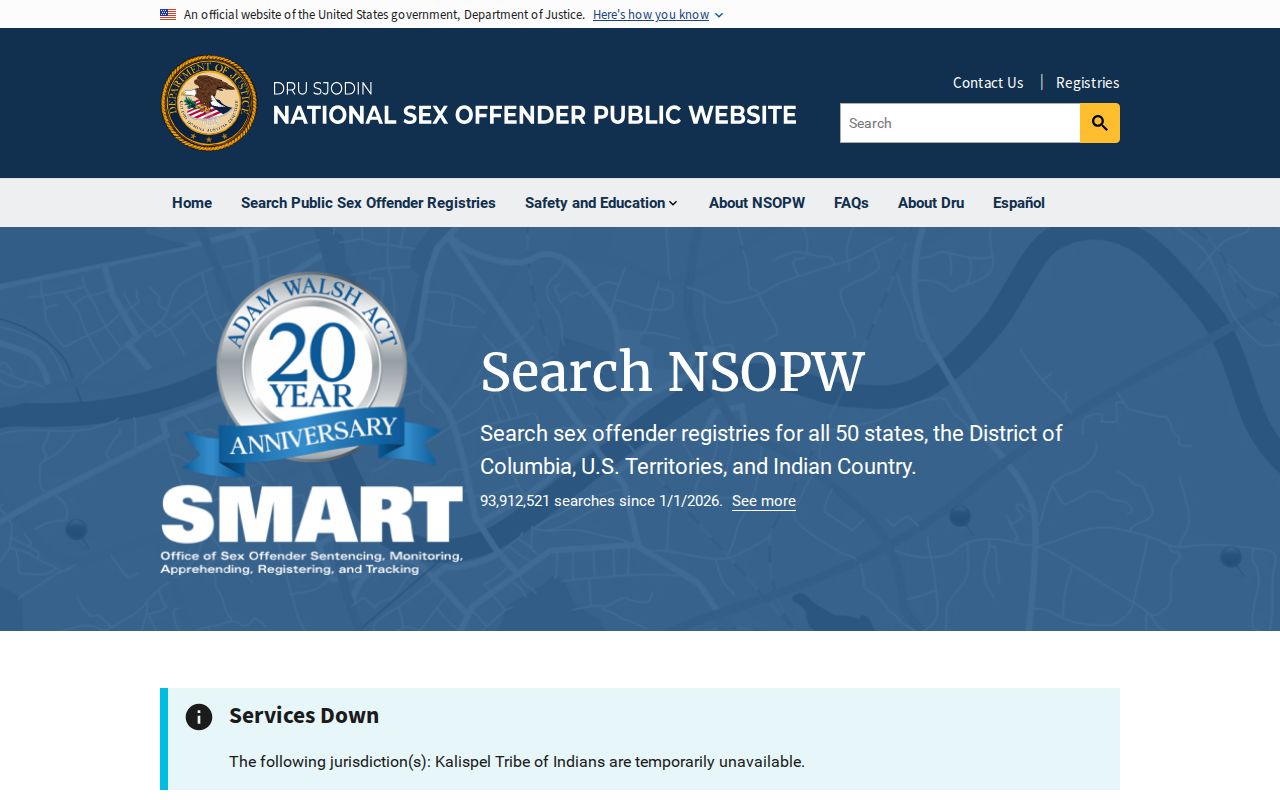
Repeat the identity comparison across both systems. A similar name is not enough, and an address in one system may reflect a later or earlier reporting event.
Reporting Registry Noncompliance in Cochran County
A profile that seems stale calls for official review, not a visit to the listed address. First check the status and update date. Then compare the photograph, aliases, age, and physical description to make sure the concern involves the same person. Contact the Cochran County Sheriff at 806-266-5211 for a suspected outdated address or failure to register. The appropriate municipal police authority may handle an address inside city limits.
Article 62.102 makes failure to comply an offense. The general grade ranges from a state jail felony for a ten-year registrant to a third-degree or second-degree felony for specified lifetime registrants, with possible enhancement for a prior failure conviction. Those rules show why law enforcement, not a private searcher, must assess compliance. Preserve the profile URL and the date checked, state the observed mismatch in plain terms, and do not spread an unverified claim.
Community Notification and Lawful Use
Texas Code of Criminal Procedure Chapter 62 supports public access and community notification. Article 62.201 addresses notice for certain high-risk registrants. Texas does not impose one statewide residence-distance rule that applies in the same way to each registrant. Conditions of parole or community supervision and local ordinances can add limits, so a map point alone cannot show whether an address is lawful.
Use a registry record for informed safety planning. Check identifiers, keep the legal record in context, and send suspected errors to DPS or the local registration authority. Do not infer current danger from the offense label alone. Never use the record to threaten a listed person, contact a household, damage property, or expose protected victim details.
Misuse warning: Harassment, threats, stalking, assault, property damage, and misuse of identifying information can be crimes under Texas law. Article 62.0061(d) also authorizes a $1,000 civil penalty for each misuse of specified commercial social-networking data or rule violation, plus costs and fees.